How the visibility score works
Applyra's visibility score turns your positions across your niche into one number per app and market, recomputed every day, so you always know where you stand.
Video transcript
The visibility score answers one question: where does your app actually stand today? It's one number from 0 to 100, per app and per market, recomputed every day from live store positions. It's led by your positions across your niche, then your place in the charts, then your rating and how recently you shipped. The keywords behind it are a fixed set from your niche, so adding keywords to your tracker doesn't move it. That's what makes today comparable with three months ago. A position counts in the top 100. Below that, nobody sees it, so it counts for nothing. Efficient keywords carry more. Ranking tenth on a term people search beats ranking third on one nobody types. And breadth beats your brand. Every app ranks first on its own name. What lifts the score is the terms a stranger would type. Read it as a trend. The same app two weeks apart is the cleanest comparison there is. And a competitor's score is built the same way, in the same market. That's the gap in Competitors Analysis.
The Applyra visibility score is a single number, from 0 to 100, for one app in one market, recomputed every day from live store positions. It answers "where does this app actually stand today" without making you read a hundred rows.
It is deliberately the result, not the cause. The listing quality that produces it is measured separately by ASO Health, and the two are meant to be read together.
What the visibility score is built from
| Signal | What it measures |
|---|---|
| Keyword positions | Where you rank across your niche, in the top 100 |
| Chart positions | Your place in the category and global charts |
| App quality | Your rating and how recently you shipped, the signals the stores weigh themselves |
Keyword positions lead, on purpose. They are the part of visibility your listing earns: the terms your app competes on, the metadata you write, the positions you win. The charts and the quality signals sit behind them, because most apps never chart at all and a number built on that would describe your category rather than your work.
The set of keywords behind the score is fixed. Applyra derives it from your app's own niche and keeps it steady, so the score answers one question and only one: did your standing in that niche improve. That is what makes a reading from today comparable with one from three months ago, and it is why the number cannot be moved by changing what you follow in the tracker.
What moves a visibility score
A position counts when it lands in the top 100 for that keyword. Below that, the keyword reads as not ranked and contributes nothing, because a user never sees it.
Two things shape the rest, and both are worth knowing before you pick your next keyword.
- Efficient keywords carry more. A term whose demand outweighs its difficulty, which is what the KEI measures, is worth more to your score than an inefficient one. Ranking third on a term nobody searches counts for less than ranking tenth on one that carries real traffic.
- Breadth beats your own brand. Ranking across several non-brand keywords is what lifts the score. Every app ranks first on its own name, so a number built on that would say nothing. Target the terms a stranger would type.
How to read your visibility score
Read the trend first. The same app across two weeks is the cleanest comparison there is, and a climb means your positions across your niche improved. A competitor's score is built the same way in the same market, which is what the gap on Competitors Analysis is made of.
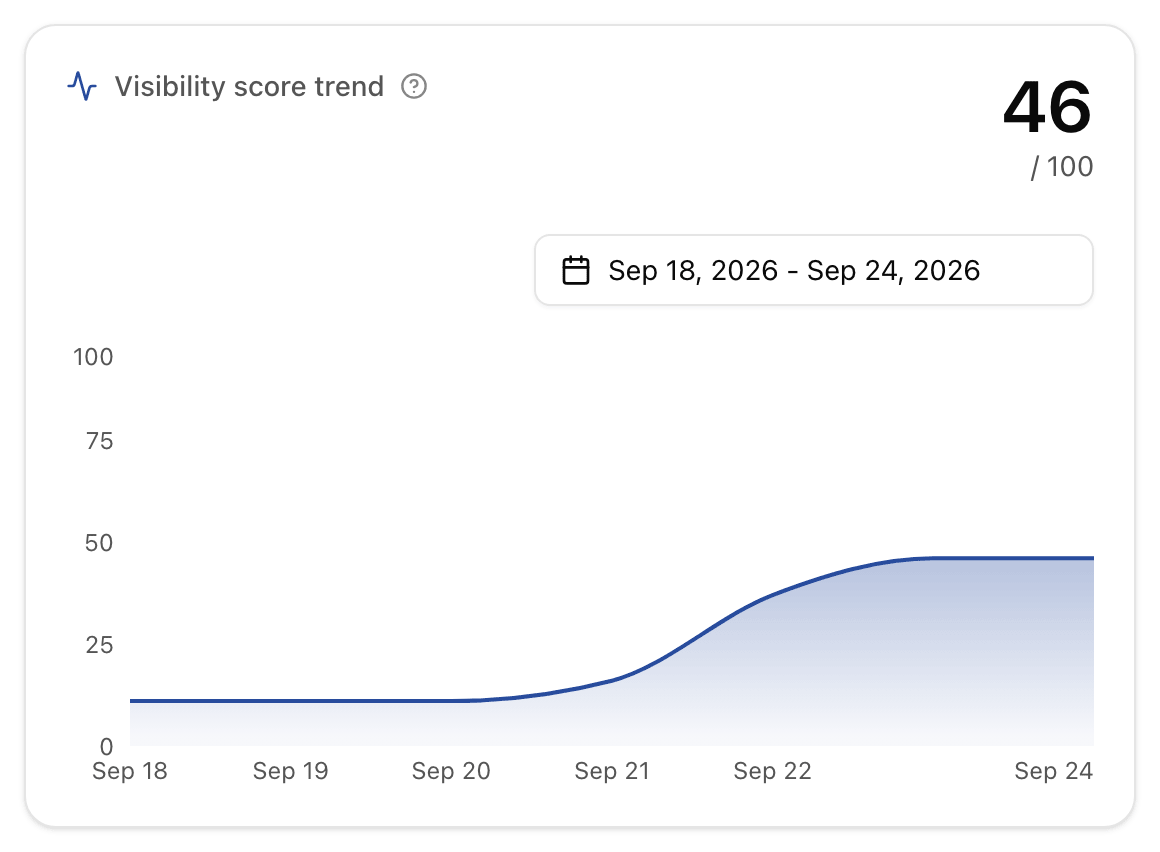
Three movements are worth a second look:
- A drop with no release on your side. Check the algorithm change detector before anything else: the stores recalibrate without announcing it, and a market-wide day shows up there.
- A drop while the keywords you track look flat. The score reads its own fixed set of terms from your niche rather than your tracker, so the two can move at different speeds without either of them being wrong. They answer different questions.
- A climb with no change in your positions. Usually a competitor slipping, which the competitor analysis will show.
How much visibility history each plan keeps
The free plan keeps 7 days of history, which is enough to see yesterday's move. The paid plan keeps all of it, and that is what makes the score readable. A listing change itself lands fast: a keyword entering the title makes most of its gain by the next daily reading. What takes a longer window is separating that move from ordinary daily noise, and from the seasonality of the category you are in. See how long ASO changes take to take effect and plans and limits.
Frequently asked questions
What is the Applyra visibility score?
The Applyra visibility score is a 0 to 100 score per app and per market that summarises where that app actually ranks today. It leads on the positions you hold across a stable set of keywords from your niche, then adds the reach your listing gets from the store charts and the quality signals the stores weigh themselves.
What is a good visibility score?
Applyra bands the visibility score for you and puts the word next to the number: Excellent, Solid, Needs work or Critical, on the same scale for every app. The reading that tells you most is still the trend, because a score climbing week over week means your positions are improving.
Why did my visibility score change without me doing anything?
The score is recomputed every day from live positions, so it moves when the store results move and when a competitor overtakes you. Adding or removing keywords in your tracker does not touch it: the score reads a fixed set of terms from your niche, so two readings a month apart are always comparable.
Last updated on